CASE STUDY
Executive Visioning & Alignment
Breaking a decade of enterprise decision gridlock to create a shared Electronic Shelf Label pilot direction
Domain: Strategic Facilitation, Executive Alignment & Transformation Enablement
Timeline: 1 full-day Workshop; 4-week preparation and synthesis phase
Role: Senior Experience Designer (Service Design), Workshop Strategy & Facilitation Lead
Process Phase: Enable
ESL EXECUTIVE VISIONING WORKSHOP
Table of Contents
Overview of workshop background, the core challenges to solve, and my role.
Definition of workshop goals, key guiding questions, and success criteria.
High-level introduction to workshop results, artifacts and impact.
Summary of workshop design approach and strategic activity methodology.
Overview of my role in leading workshop activities.
Showcase of final workshop artifacts and deliverables.
Explanation of workshop synthesis process and stakeholder share-out.
Presentation of outcomes, impact and key learnings.
Links to related work case studies.
SITUATION
Years of stalled progress and political strife led to a strategic challenge to align enterprise leaders on ESL use cases.
A major retailer had explored Electronic Shelf Labels (ESLs) for over a decade without success, stalled by siloed efforts, internal politics, and technology constraints. After multiple brand mergers and a shift toward centralized operations, manual in-store pricing workflows continued to cost millions annually. While the time was right for ESLs, leaders needed alignment on priority use cases, risks, and sequencing before test piloting in stores.
Challenges
Multiple brands had different business goals and pricing strategies.
Past failed ESL initiatives created low confidence in the technology despite major investment.
A long list of 30 potential use cases needed to be reviewed and prioritized.
Constraints
The workshop had a short timeline to prepare and run.
The session needed to support both remote and in-person participants.
Senior executives were attending, creating high expectations for the outcome.
My Role
I co-led the strategic planning, design, facilitation and synthesis of the workshop.
Team: Partnered with one other Senior Experience Designer
“How might we drive alignment, prioritize use cases, and surface risks to confidently launch an ESL pilot through an inclusive, high-impact hybrid workshop?”
TASK
Design and lead a high-stakes hybrid workshop experience to break a decade of stagnation and siloed thinking.
Goal
Align leaders and subject-matter experts across brands and business functions around common high-impact ESL use cases, surfacing constraints, risks, and pilot opportunities. Build confidence and momentum for in-store pilot testing while fostering a psychologically safe, collaborative environment that supports both in-person and remote engagement equally.
Key Questions
Which ESL use cases deliver the highest business, associate, and customer value?
What risks (viability, feasibility, usability, value) must we anticipate and test first?
How might a large group of leaders collectively prioritize without historical biases and internal politics dominating decisions?
Success Criteria
Consensus on top four ESL use cases for pilot testing.
Clear understanding and documentation of critical risk themes.
Strong cross-functional alignment and engagement.
Leadership confidence in moving forward with the pilot across all brands.
Create a fun, engaging, and impactful session.
IMPACT PREVIEW
Executive alignment turned a decade of stalled effort into a plan of action for the future.
The workshop enabled 24 executive leaders across multiple brands and business functions to collectively prioritize high-value ESL use cases for pilot testing and developed a shared understanding of key risk themes. Leaders left on an aligned path forward, with a clear foundation for a strategic business case, demonstrating the power of human-centered, collaborative methodology.
-
A hybrid workshop aligned leaders on four high-value ESL use cases for pilot testing after years of stalled progress.
-
Surfaced six cross-functional risk themes (labor, usability, feasibility, operations, sales, business impact) to inform smarter pilot design.
-
Accelerated decision-making by creating shared clarity and direction across brand, business and functional executives through interactive workshop activities.
-
Workshop outputs directly shaped in-store pilot scope, sequencing, and implementation next steps.
-
Established a clearer view of how ESLs impact both associate efficiency and customer experience.
-
Converted the workshop approach into reusable activities and facilitation guidance that can support future executive alignment sessions.
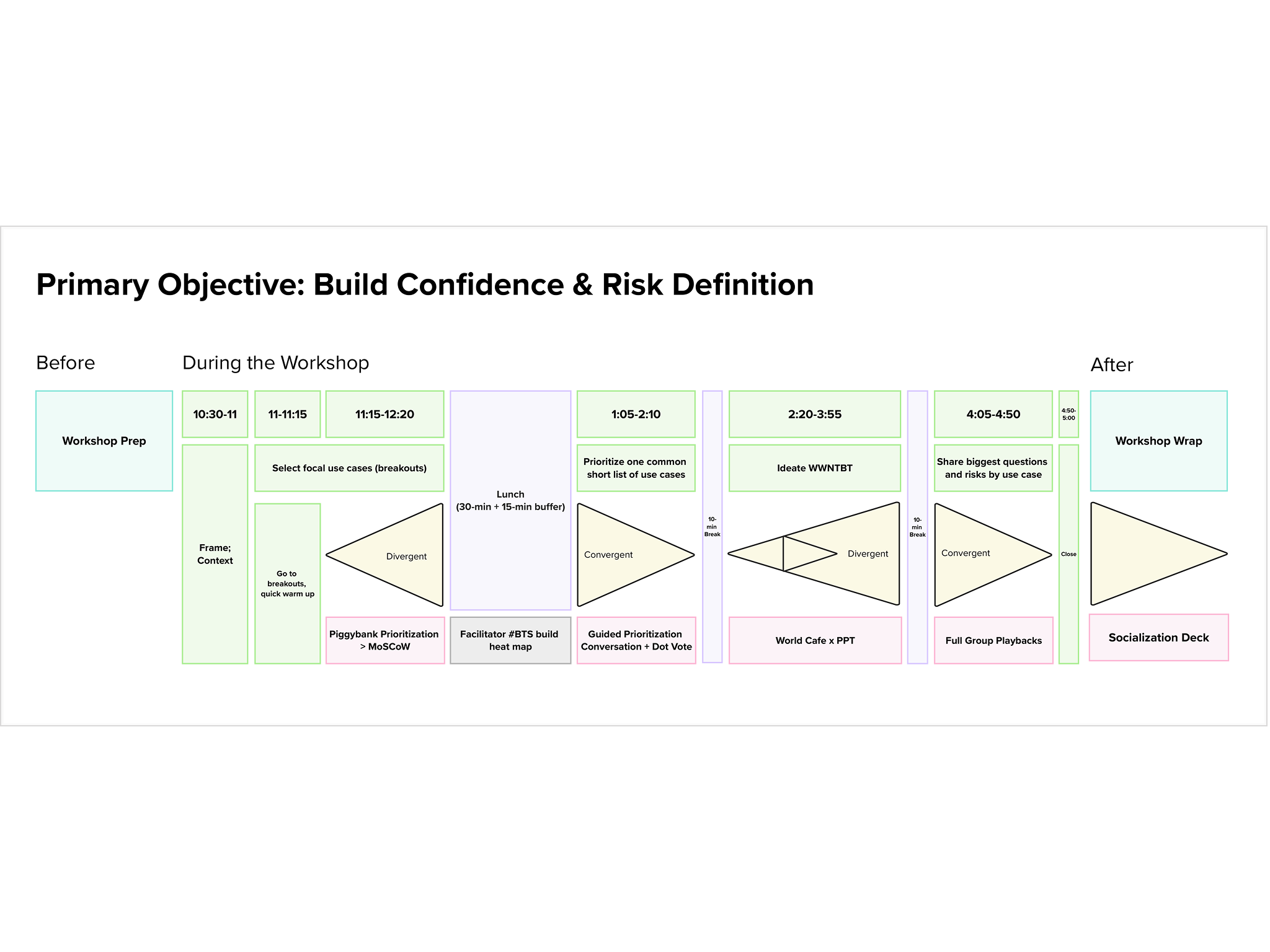
Early workshop framework sketch
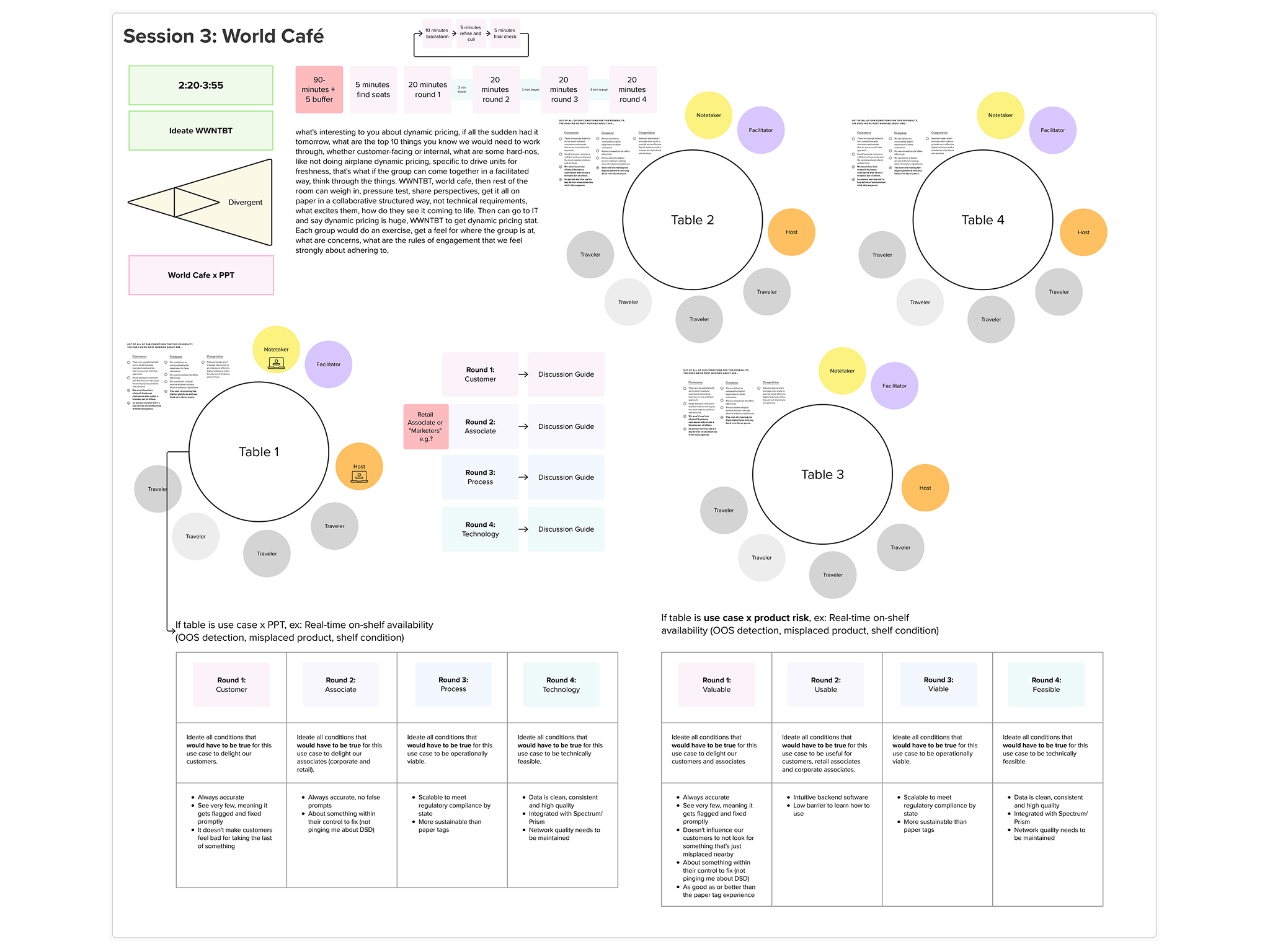
Activity sketch
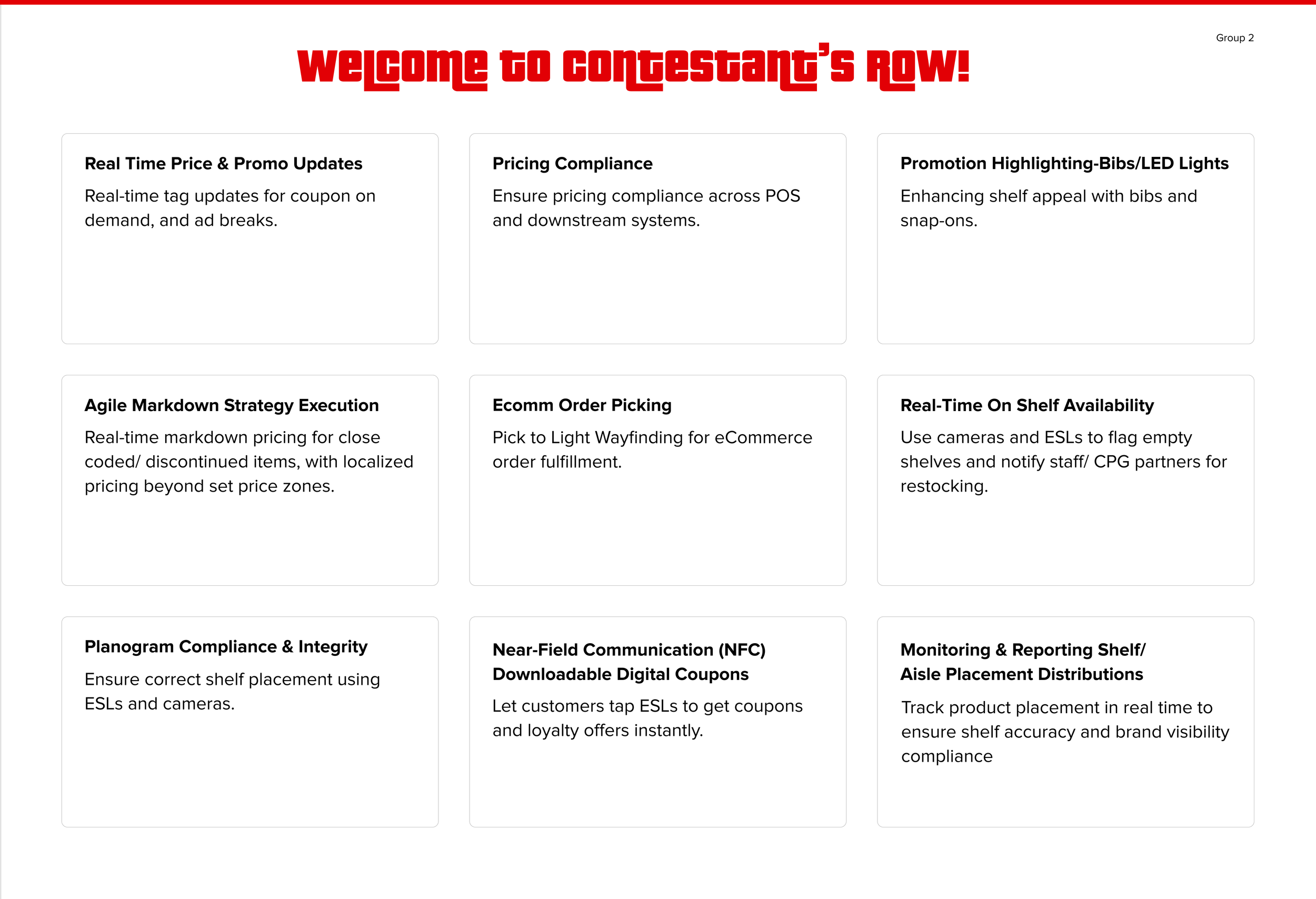
Activity Materials
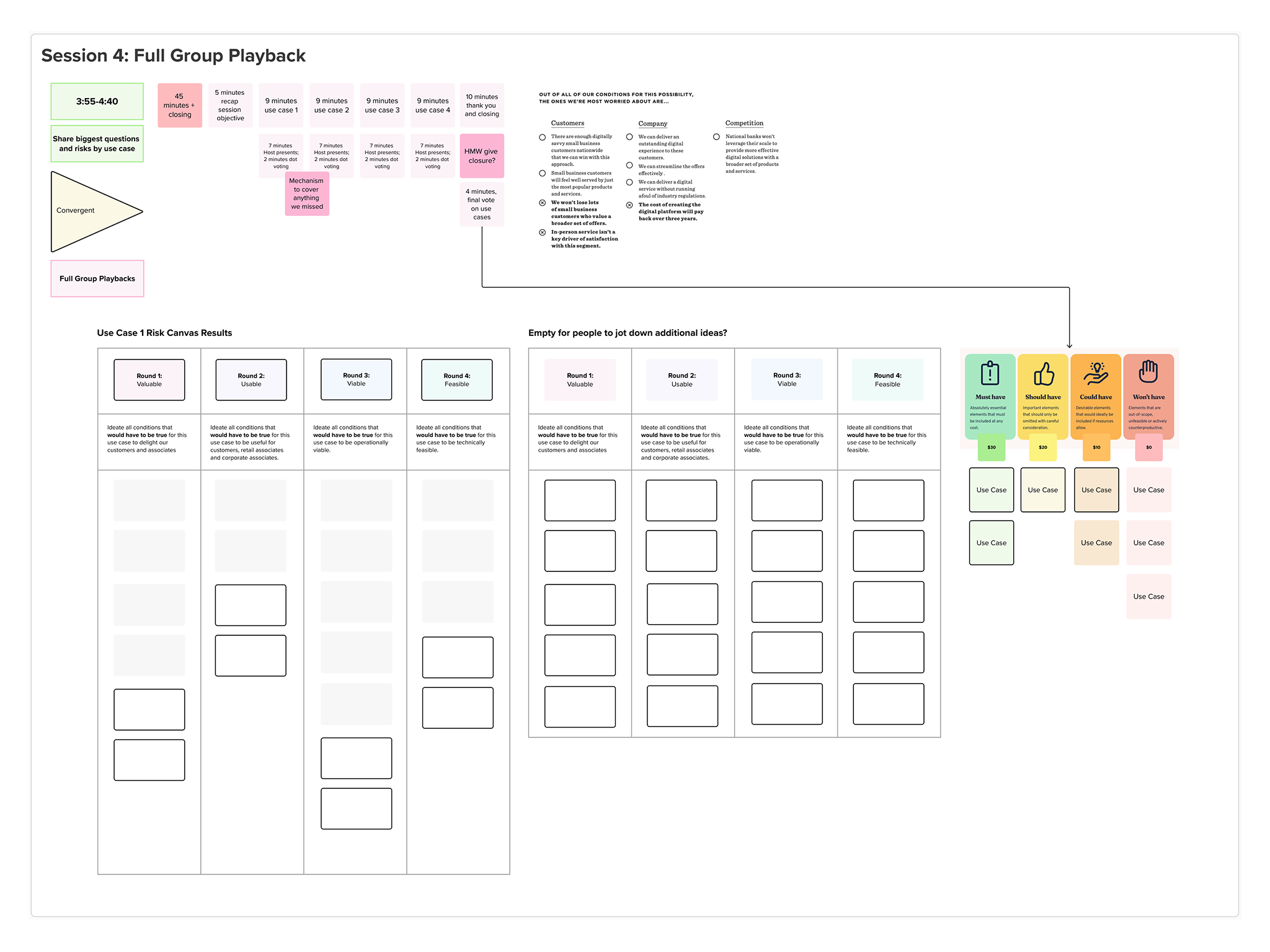
Activity sketch
Activity Materials
DESIGN & METHODOLOGY
Crafted a high-impact hybrid workshop rooted in Human-Centered methodology and strategic trade-offs.
Using the Double Diamond framework, I co-designed a hybrid, hands-on, interactive workshop that balanced divergent and convergent thinking while keeping energy high with a playful “Price is Right” theme. The approach prioritized engagement, alignment, and actionable insights, across in-person and remote participants.
Conducted stakeholder interviews to clarify goals, scope, and success criteria.
Developed a workshop plan and facilitation strategy tailored to hybrid participation.
Surveyed participants in advance to pre-gauge interest and prioritize potential use cases.
Created rapid “sacrificial” concept prototypes for activities, iteratively tested with peers to refine flow and engagement.
Leveraged Nexus retail personas, Item Management research, and Customer Journey Maps to better understand the problem space and ground activities in user-centered insights.
Key Insights
Delivered high-fidelity workshop activities, artifacts, and a facilitation guide ready for execution.
Designing a seamless hybrid experience requires careful planning, appropriate tooling, and detailed materials.
Attention to detail is critical: small oversights can quickly derail workshop outcomes.
Strategic Decisions & Trade-offs
Adjusted breakout activities last-minute to accommodate unexpected additional participants while maintaining engagement.
Limited preparation time increased risk of rushed delivery, emphasizing the value of early, iterative testing and rehearsal.
Used a pre-work ranking survey to narrow 30 potential use cases to 9, keeping the workshop focused and productive.
Activity 1 sketch
Activity 2 sketch
Activity 3 sketch
Activity 4 sketch
FACILITATION & LEADERSHIP
Engaging activities delivered clear ESL priorities & risk insights.
I co-led and directed end-to-end workshop facilitation to deliver a seamless, inclusive experience for both in-person and remote participants. This involved strategic orchestration of people, tools, and activities to ensure engagement, alignment, and actionable outcomes across a senior cross-functional audience.
Directed the run of show and coached five facilitators to deliver a cohesive and high-energy experience.
Facilitated group and breakout discussions, navigating conflict and fostering alignment among 24 senior leaders.
Orchestrated hybrid collaboration tools (PowerPoint, Mural) to maintain equitable participation and workshop momentum.
Key Insights
A themed, structured workshop design enabled engaging cross-functional dialogue and effective hybrid participation while diffusing and disarming tensions.
The facilitation team demonstrated strong adaptability, trust, and collective expertise, delivering successful outcomes despite logistical challenges.
Active attention to participant experience and tool orchestration is critical for high-stakes hybrid workshops.
Strategic Decisions & Trade-offs
Logistical constraints (space, equipment gaps, and last-minute tech issues) required real-time problem-solving to maintain flow.
Minor errors and an early session close highlighted the need for enhanced quality checks in future workshops.
Limited prep time restricted full rehearsals and equipment testing, emphasizing the importance of early run-throughs for hybrid delivery.
Balancing engagement between remote and in-person participants required careful facilitation and tech coordination to minimize gaps in experience.
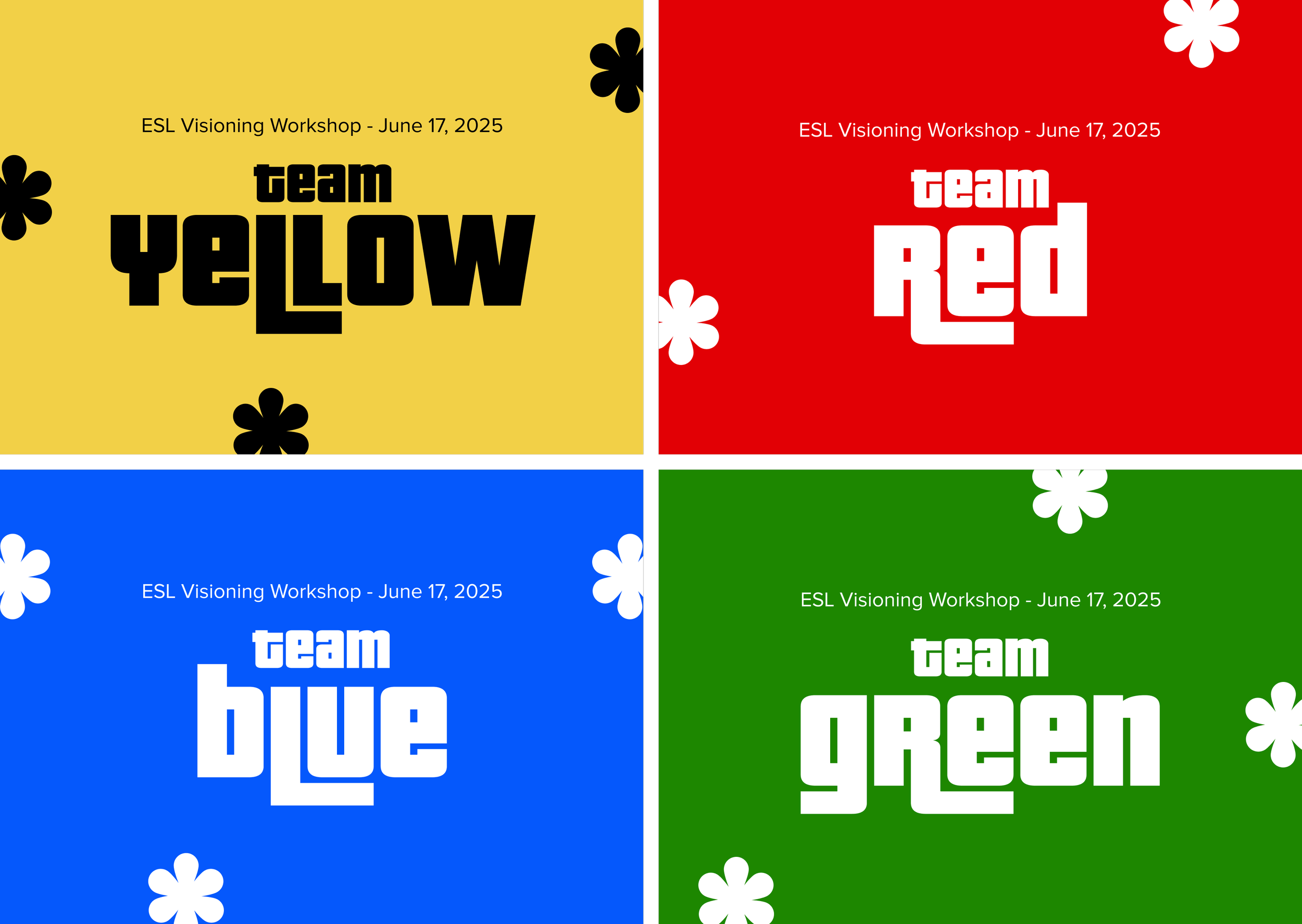
Participants were broken out into 4 groups: Yellow, Red, Blue or Green
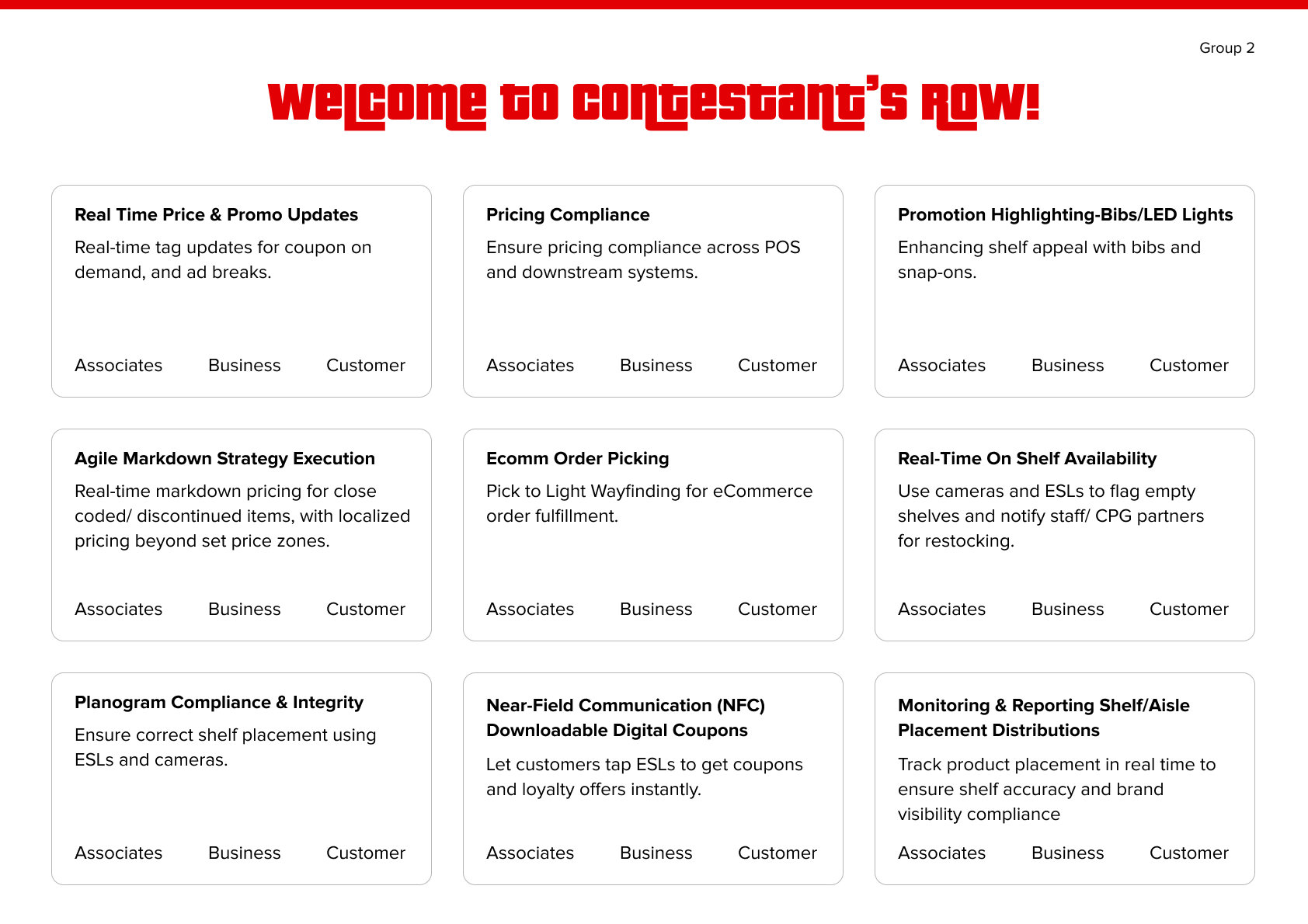
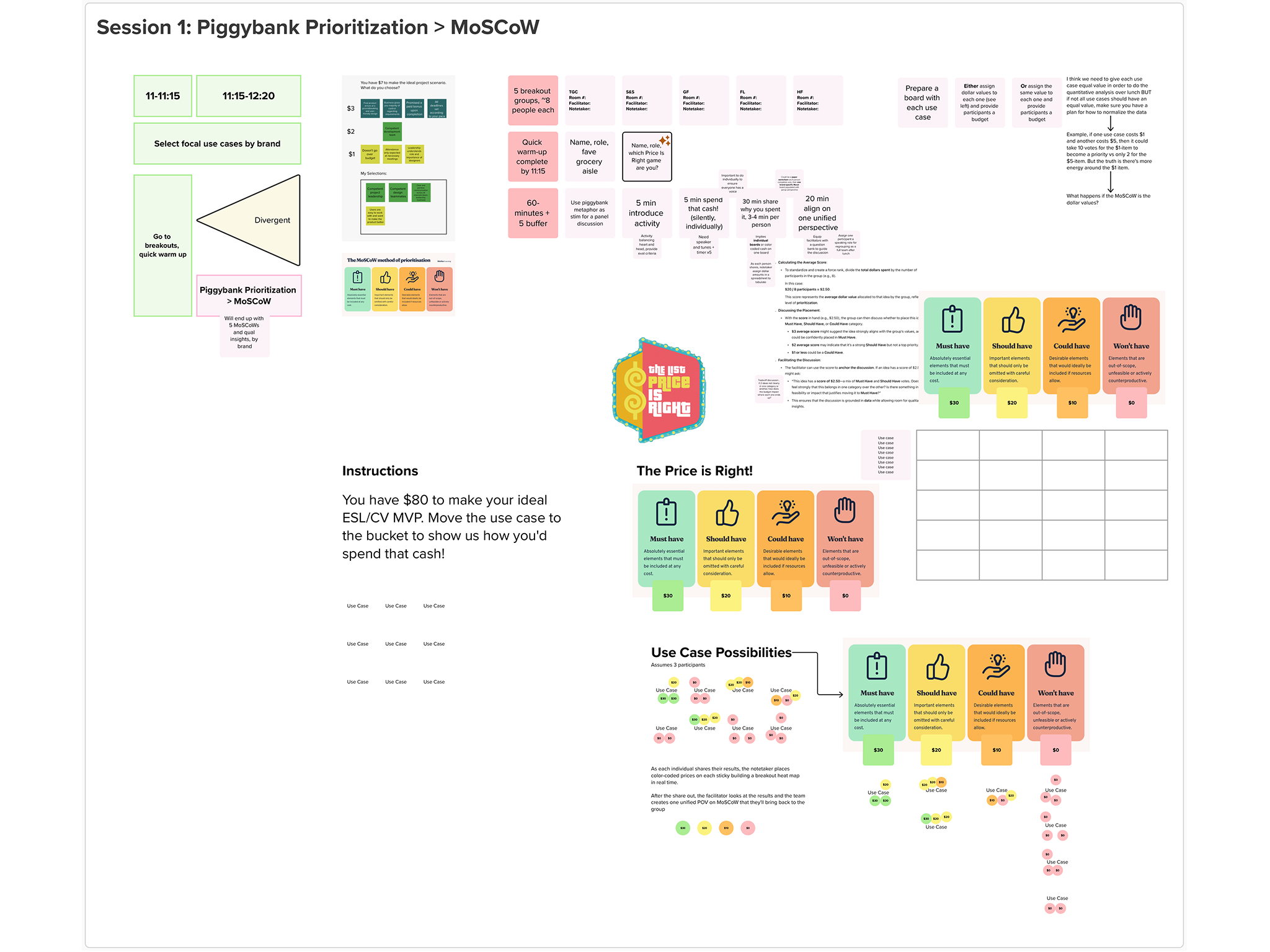
Activity 1: Participants diverged into breakout rooms where they completed an async worksheet for their personal "bids" using dot stickers. Participants then reviewed and discussed their bids in their breakout groups, identifying their collective top 3 use cases to move forward into the next round.
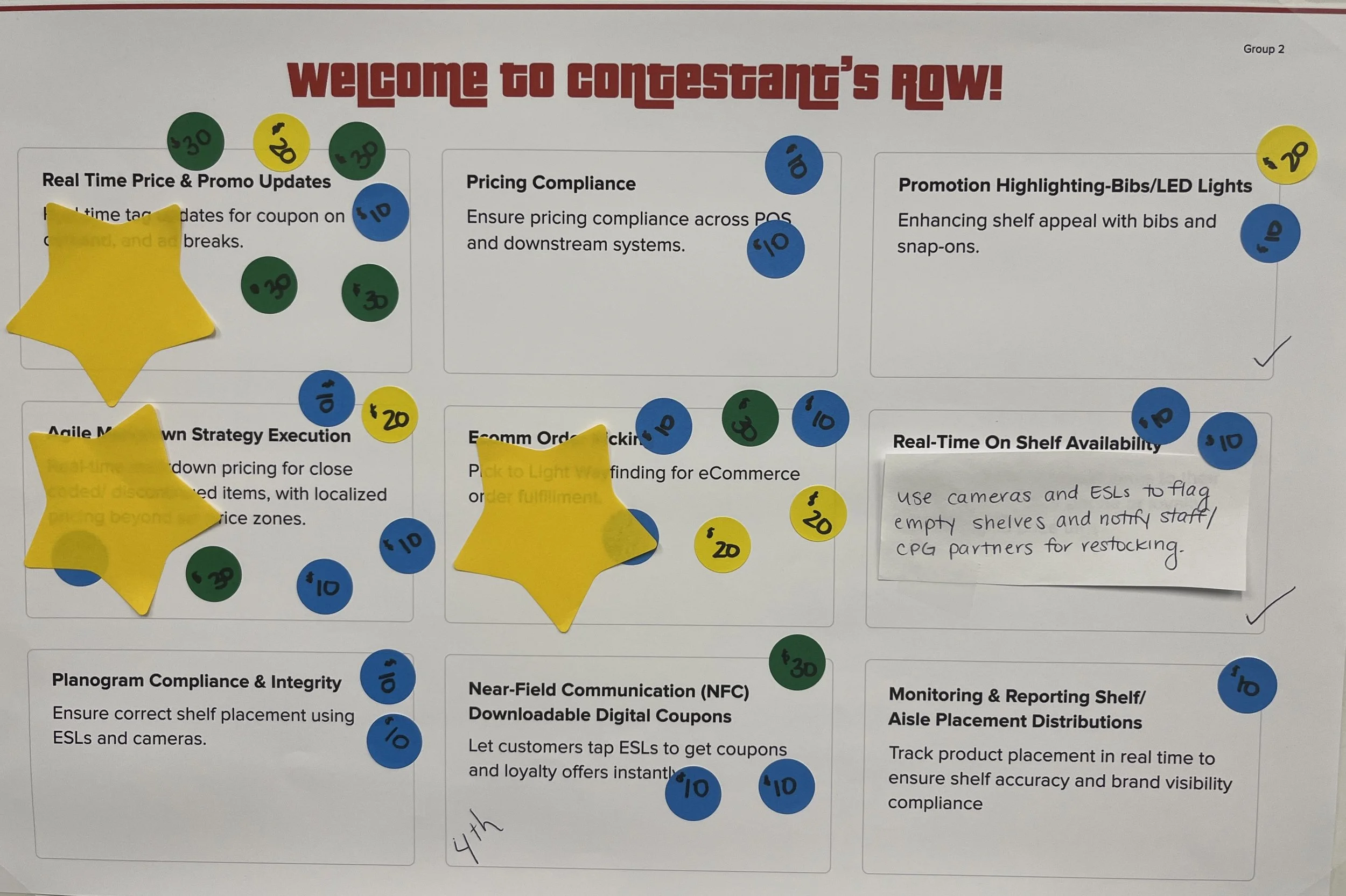
Activity 2: Completed boards and reasoning were then shared with the broader group.
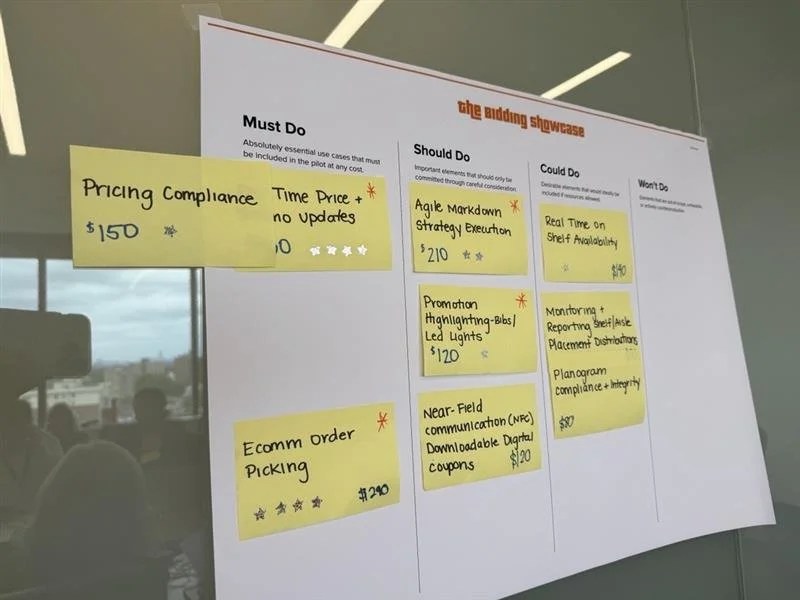
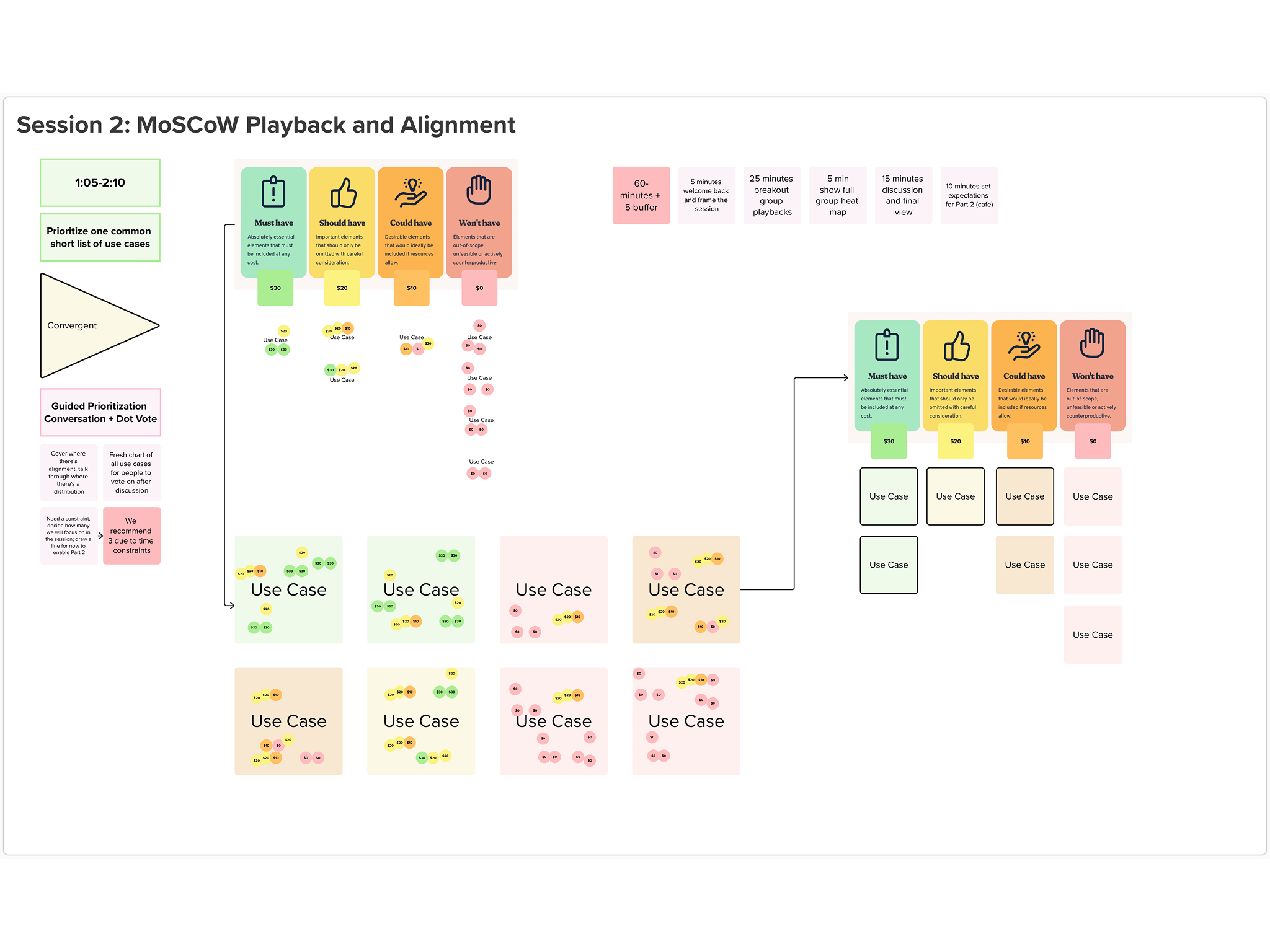
Activity 2: All participants converged by leveraging MoSCoW to prioritize 4 use cases using rationale from activity 1 to support group discussion.
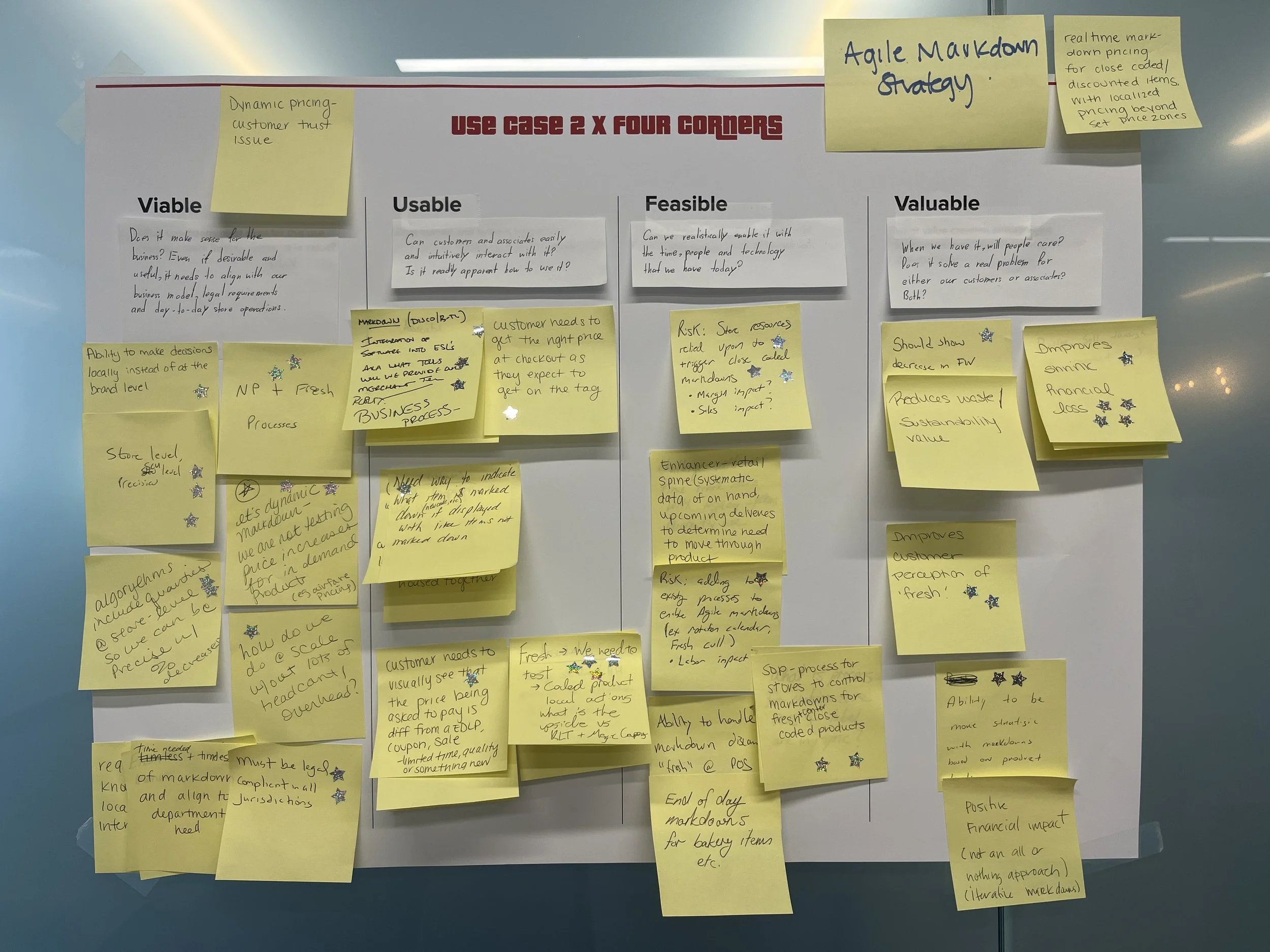
Activities 3 & 4: Each participant rotated through 4 breakout rooms, each focusing on ideating risks for a prioritized use case. Risks and rationale were then shared with the full group before moving into a final voting session.
-
Activity 1: Contestant's Row
Diverge: Participants allocated hypothetical “bid money” across ESL use cases, justifying choices to peers.
-
Activity 2: Bidding Showcase
Converge: Groups shared spend rationale and collectively applied MoSCoW prioritization to converge on top four use cases.
-
Activity 3: Four Corners Challenge
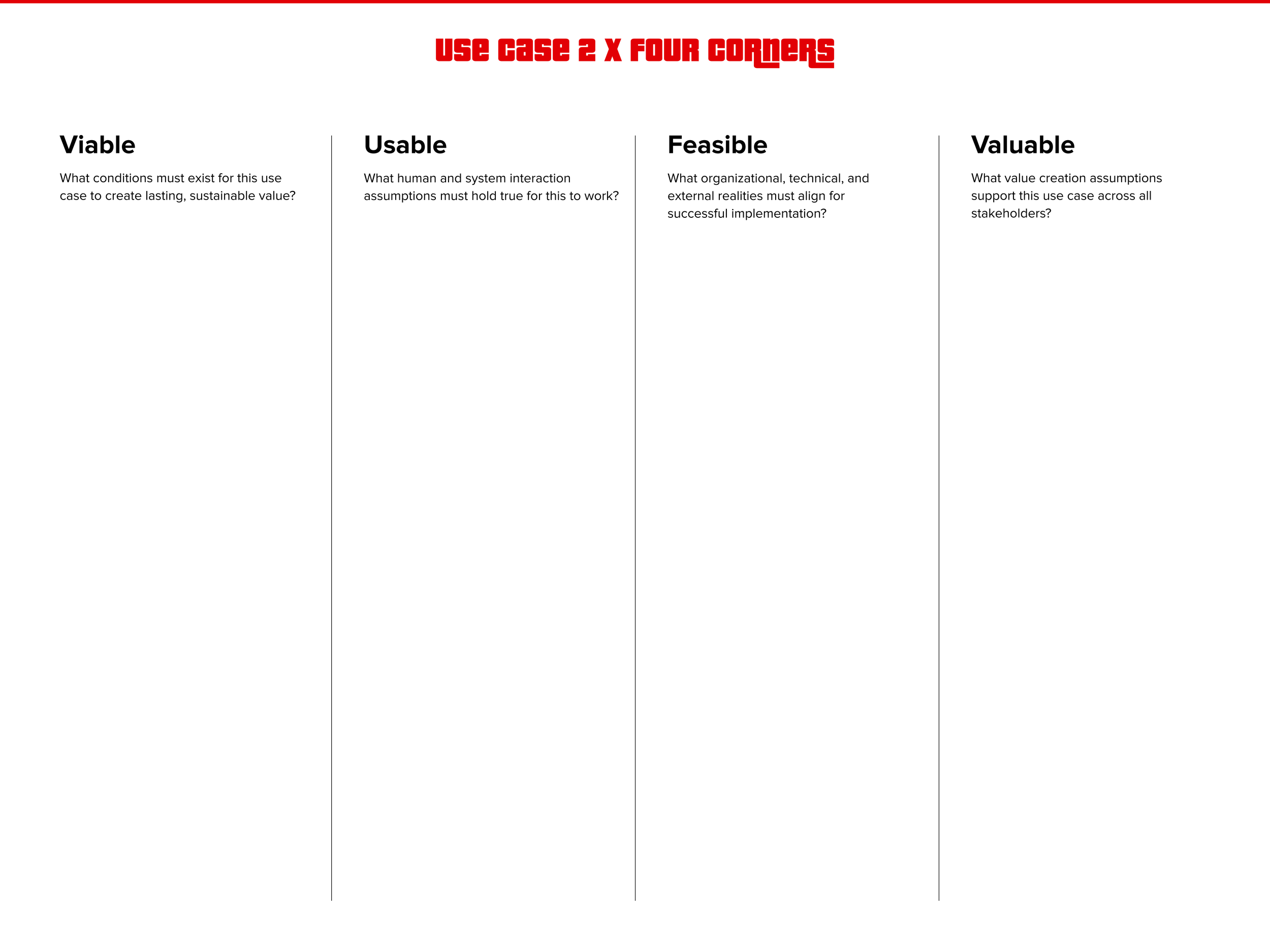
Diverge: Teams brainstormed success hypotheses for each use case by Viable, Usable, Feasible, and Valuable categories, then voted on critical risks.
-
Activity 4: Final Showcase
Converge: Groups shared risks and voted to finalize pilot testing sequence.
SYNTHESIZE & SHARE
Synthesis revealed six key risk themes to guide the ESL pilot strategy forward.
After the top four priority ESL use cases were identified during the workshop, we leveraged Mural to digitize and synthesize all the collected data, enabling a clear and collaborative analysis to define key themes. Through this process, we uncovered six critical risk areas to guide pilot planning.
Risk Themes
System Integration & Data Infrastructure: Ensure seamless, scalable systems that support accurate pricing execution.
Operational Efficiency & Labor Optimization: Enhance productivity and workflows to optimize labor and store operations.
Customer Experience & Communication: Provide intuitive tools and training to empower associates and improve customer service.
Associate Experience & Enablement: Create a transparent, supportive environment with consistent messaging and alignment.
Governance & Strategic Measurement: Maintain legal compliance, process discipline and performance tracking to maximize ROI.
ESL Functionality, Hardware & Accessories: Guarantee reliable, responsive hardware suited for complex store environments.
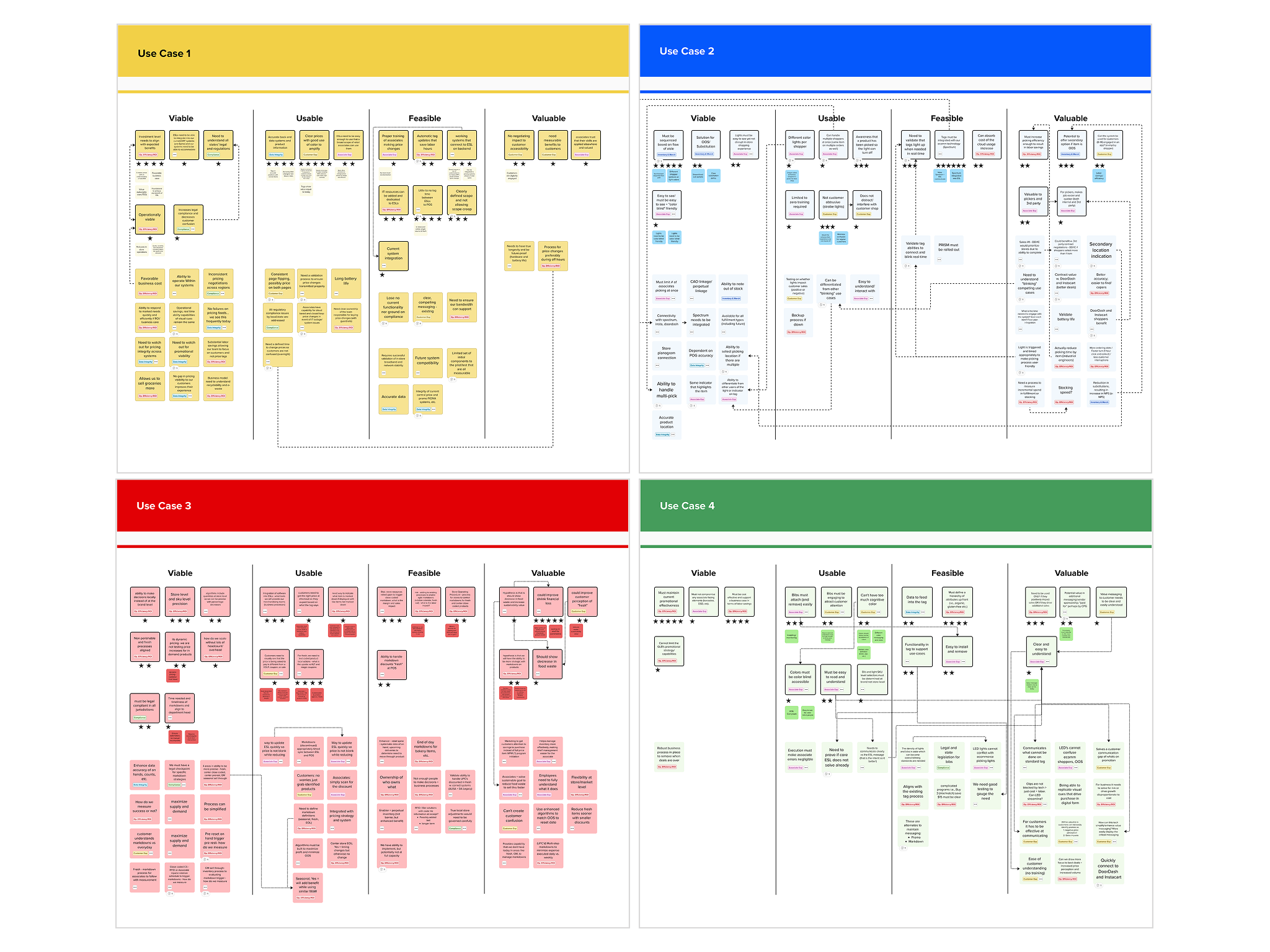
1. We started by digitizing all workshop data points using Mural.
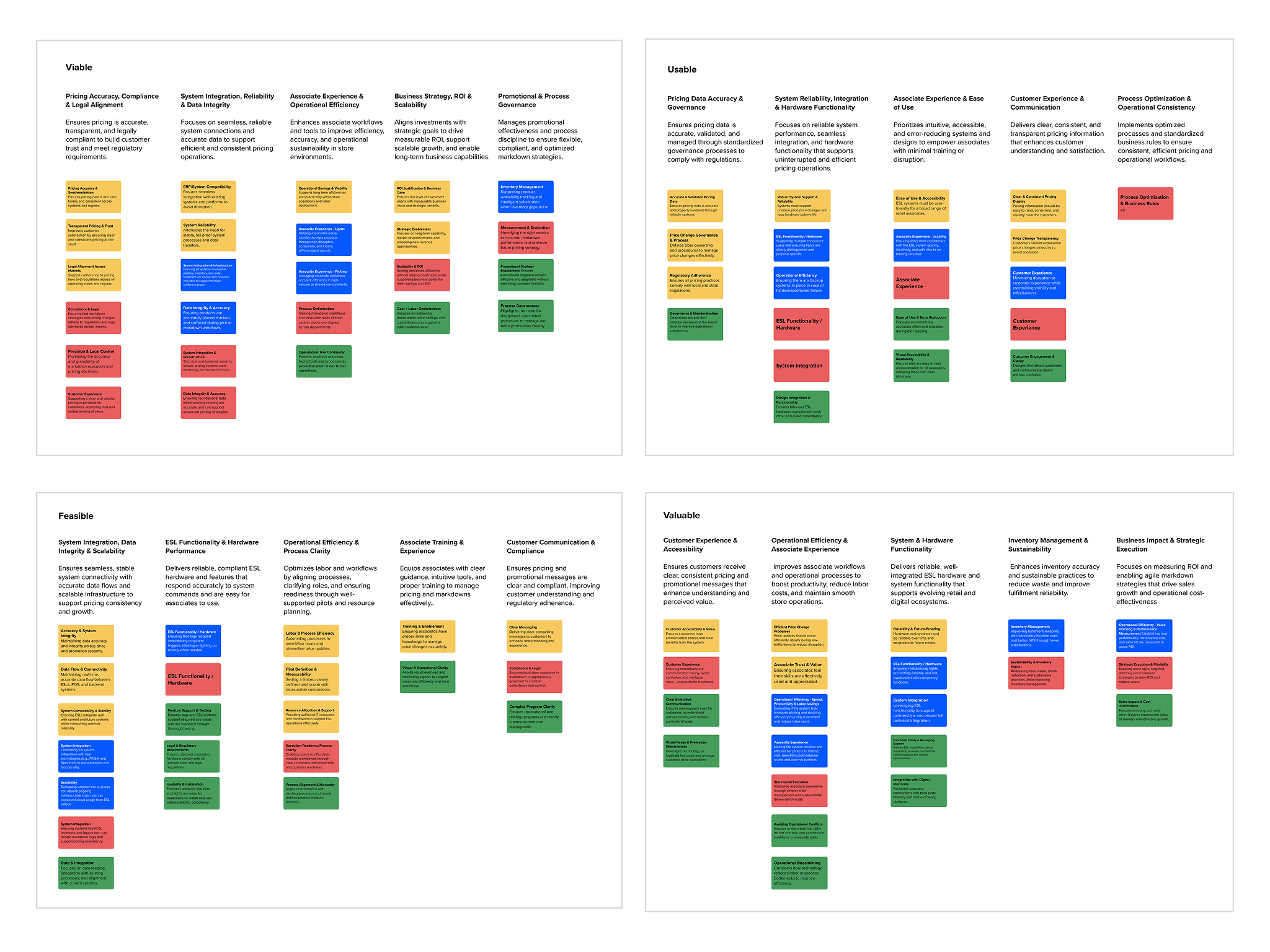
2. Next, we consolidated by creating 6 key themes across all use cases grouped by Viability, Usability, Feasibility and Value.
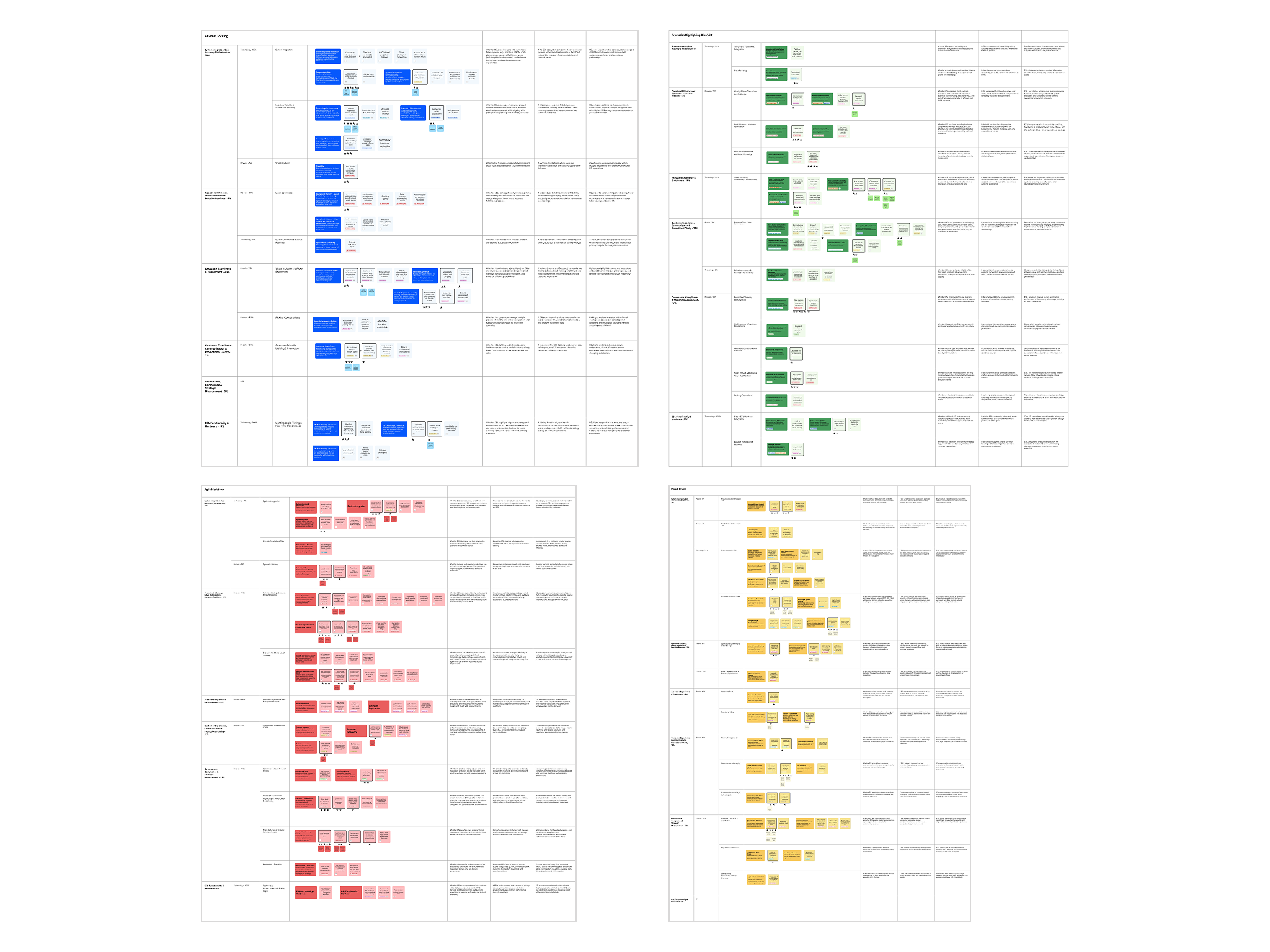
3. Next, we dove deeper into each of the six themes for each use case by arranging risks through the lens of People, Process and Technology.
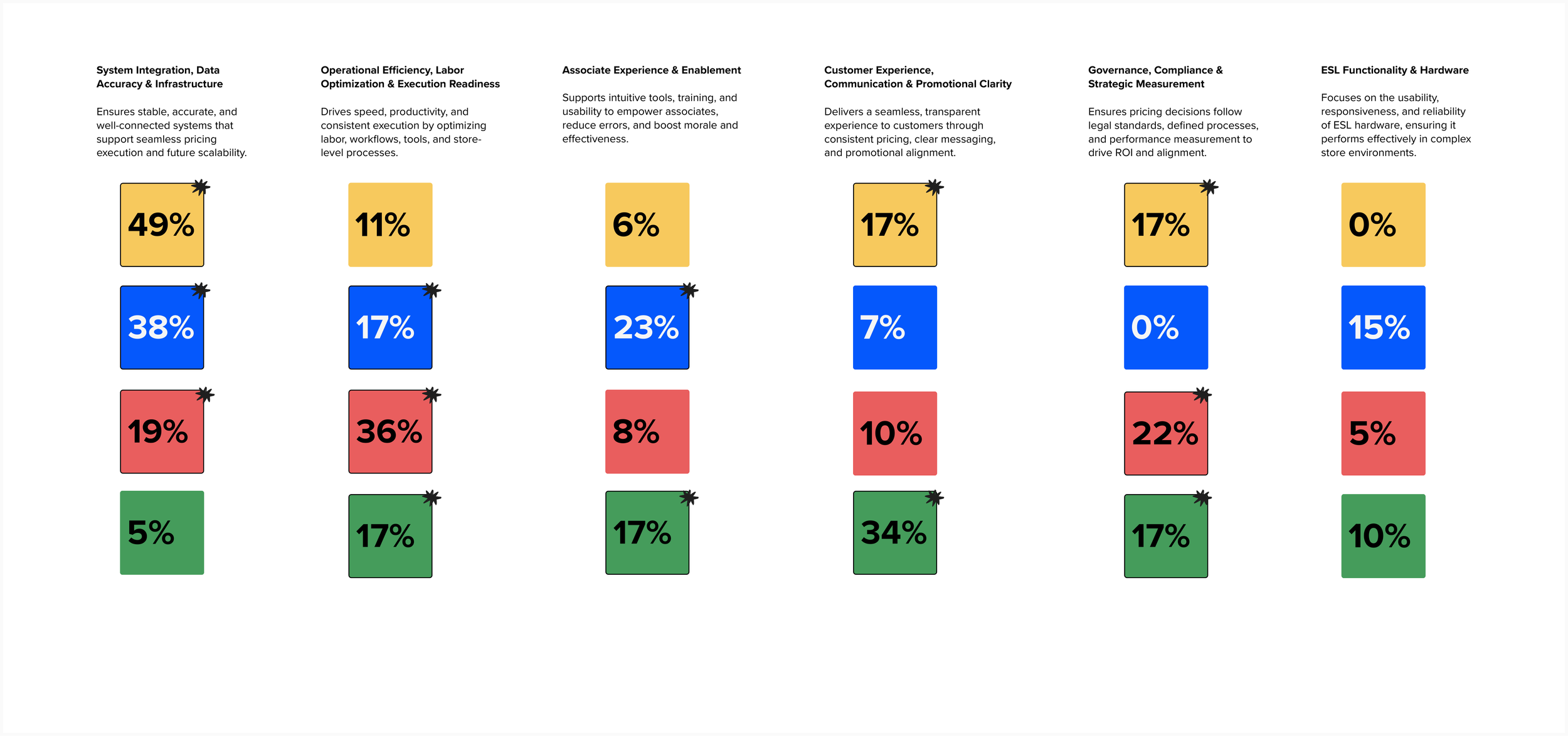
4. Lastly, we calculated totals for each use case as a percentage point for each risk theme to quantify our findings.
RESULTS & IMPACT
The workshop was challenging, but proved the power of human-centered design.
The workshop accelerated alignment on ESL strategy, breaking decades-long decision gridlock by establishing shared clarity on priority use cases, risks, and CX implications. Outputs directly informed pilot design, strengthened cross-functional confidence in human-centered methods, and demonstrated the value of design leadership in enabling evidence-based decision-making.
Early momentum enabled faster prioritization, reduced uncertainty, and positioned ESLs as both an operational efficiency lever and a customer experience enabler, linking associate experience improvements directly to customer outcomes.
Impact
Four ESL use cases identified and prioritized for pilot testing (reduced from 30).
Six cross-functional risk themes surfaced to inform pilot design reducing operational risk.
24 executive leaders aligned on ESL direction, accelerating decision-making after prolonged stagnation.
Workshop outputs directly shaped pilot scope, sequencing, and next steps.
Clearer understanding of how ESL deployment impacts both associate efficiency and customer experience.
A template and step-by-step facilitation guide were created to streamline future workshops and scale learnings.
Key Lessons
Scope, schedule rooms, and test technology well in advance.
Intentional pacing and rehearsal are critical to sustain energy and avoid facilitator or participant burnout.
Engagement and alignment are influenced as much by logistics and interaction design as by strategic content.
Remote and in-person participants require additional planning, tools, and attention to detail.
Next Steps
The pilot team advanced the top four ESL use cases, with IT and operations progressing through requirements gathering. Insights from the workshop are informing a strategic ESL business case, ensuring a risk-informed, human-centered approach to enterprise-scale deployment and long-term value realization.
Continue the journey by reading these related case studies.
-
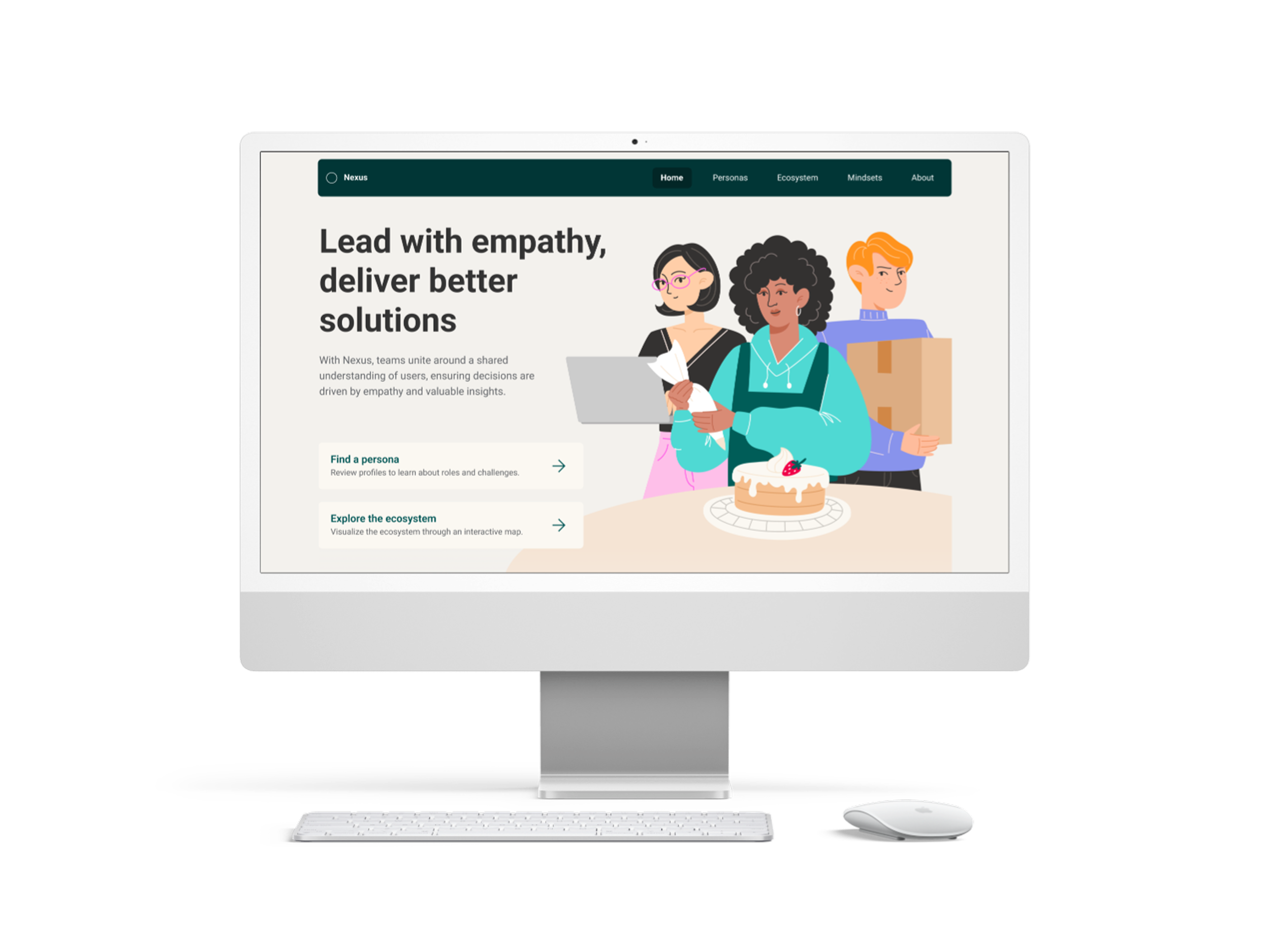
Reveal: Nexus Persona Ecosystem
Turn research into shared understanding.
I built and activated an enterprise ecosystem of 30+ validated personas, supported by AI-enabled research workflows, training, activation tools, and a maturity framework that embeds insight into everyday decision-making.
-
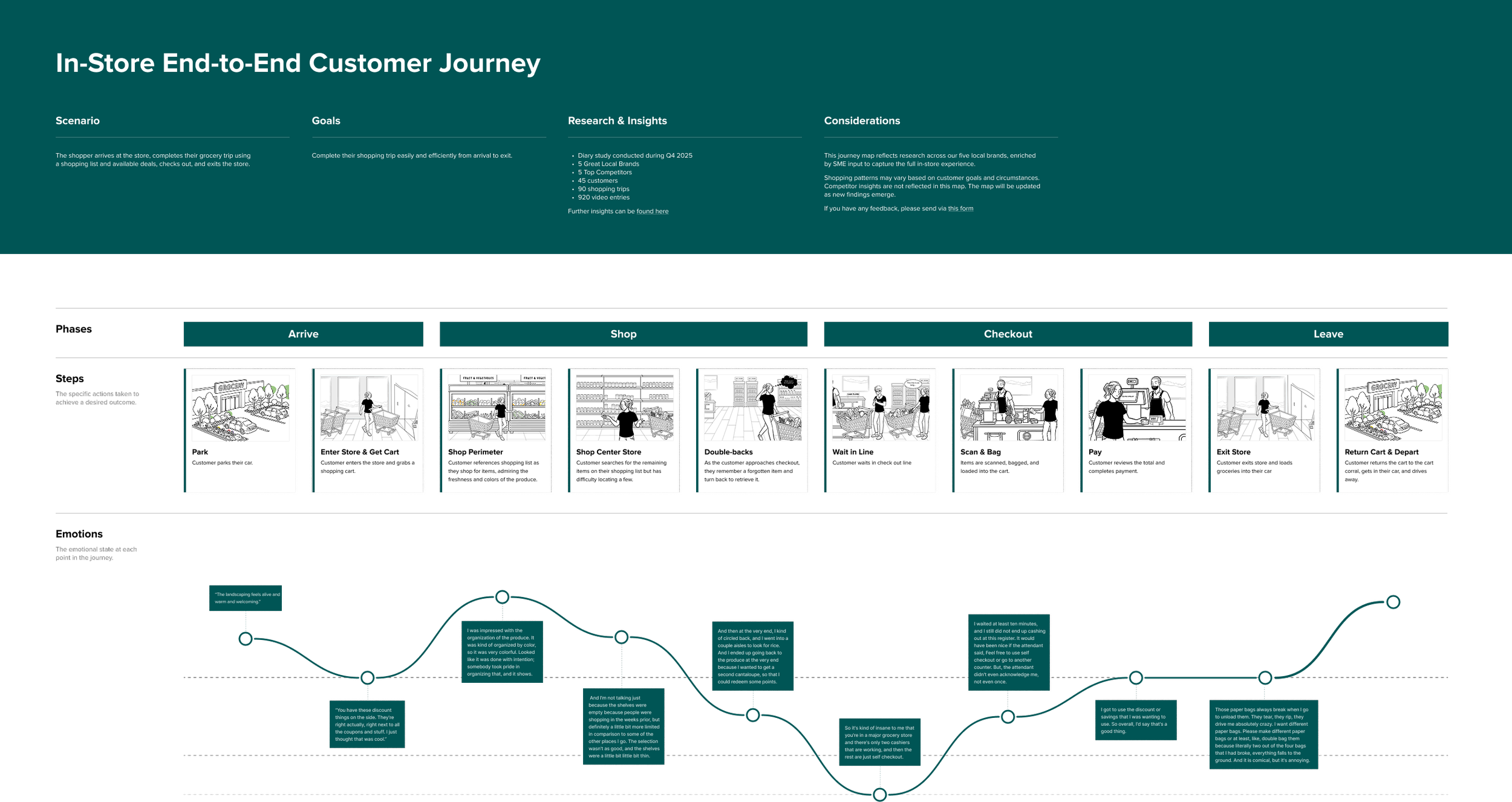
Translate: Enterprise Journey Management
Create a shared view of the end-to-end experience.
I established and lead the organization’s foundational Journey Management capability, connecting customer journeys, associate service blueprints, and scalable governance to uncover systemic gaps and inform experience strategy.
-
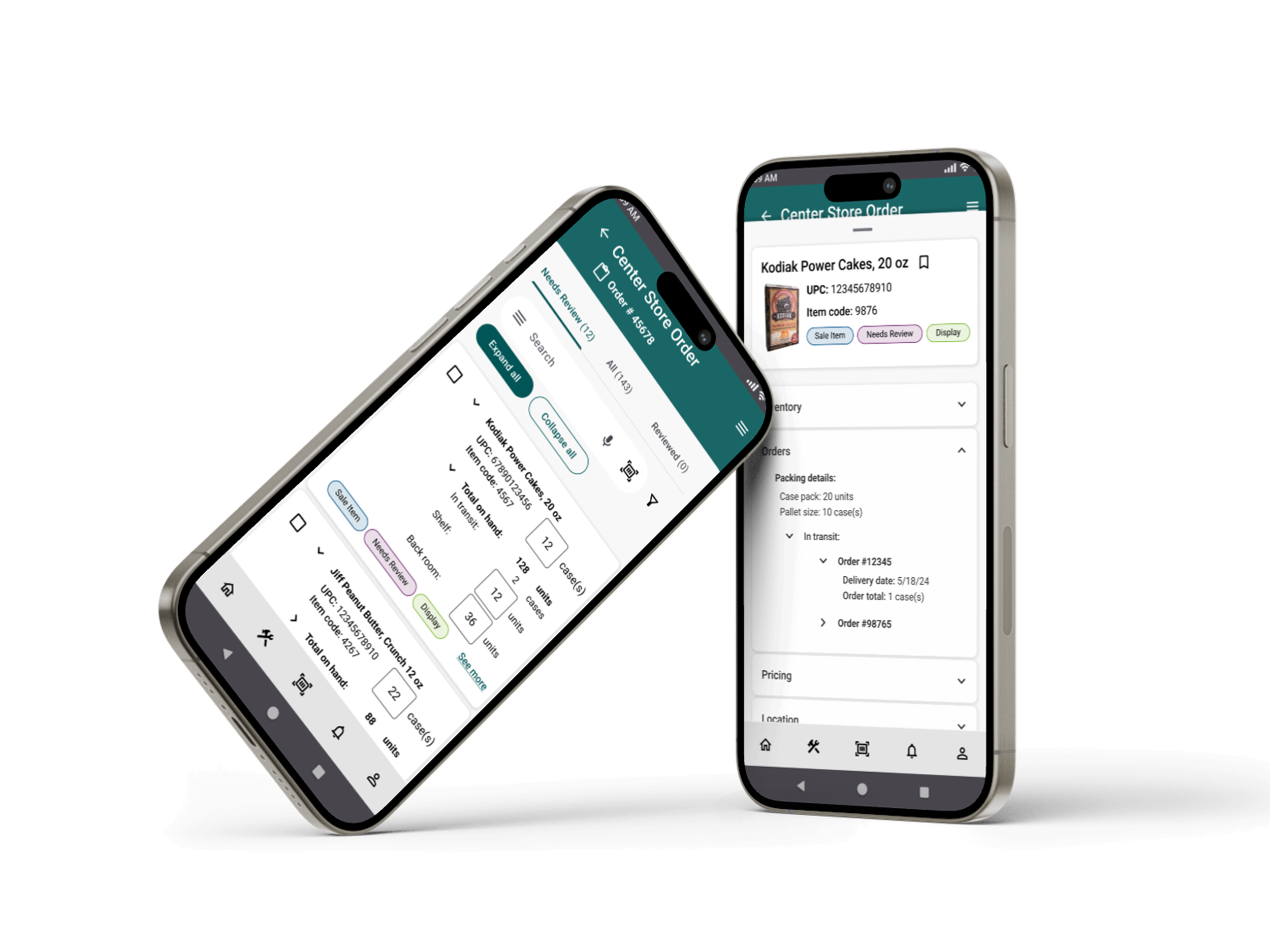
Transform: Legacy System Modernization
Design across people, processes, and technology.
I led a major enterprise modernization initiative consolidating multiple legacy systems and 40+ fragmented workflows into a single future-state concept, aligning leadership on a multi-million-dollar investment strategy.